



What is Full Stack Development? The Basics and Beyond
- 2026-05-18
- 1 Com
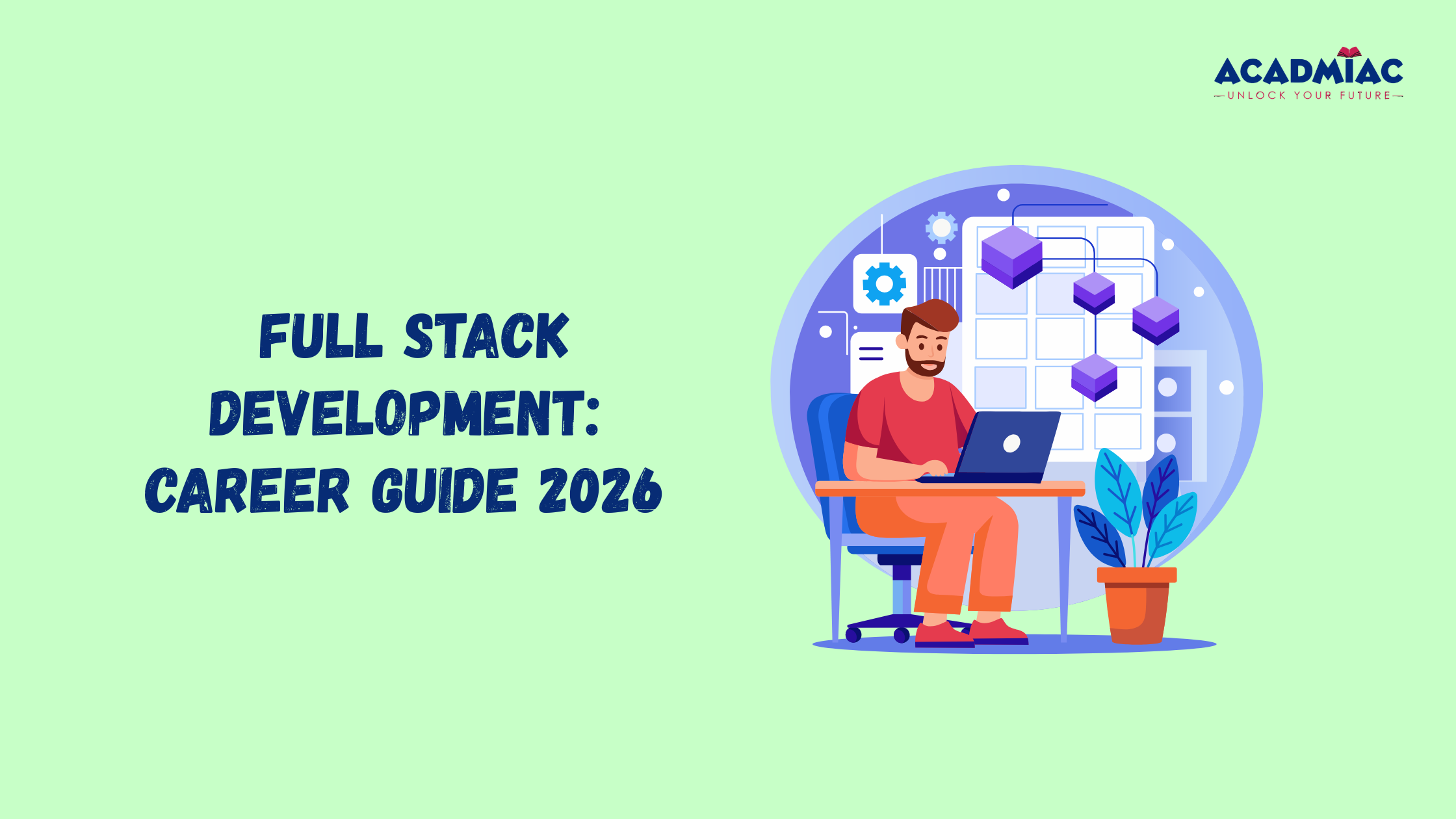
Every website or app you use today, from social media platforms and food delivery apps to online shopping websites, works through two important sides: the frontend that users interact with and the backend that powers everything behind the scenes. Full-stack development combines both of these areas, allowing developers to build complete web applications from start to finish.
As businesses continue moving toward digital platforms, full-stack developers have become some of the most in-demand professionals in the tech industry. But what exactly is full-stack development, and why is it such an important skill today? Let’s understand the basics and beyond.
What is Full Stack Development?
Full-stack development is the process of building both the frontend and backend parts of a web application. In simple terms, it involves creating everything users see on a website, along with the systems that work behind the scenes to make the application function properly. The frontend, also known as the client side, includes the design, layout, buttons, menus, and all the visual elements users interact with directly. The backend, or server side, handles the application’s logic, databases, servers, authentication, and data processing. A full-stack developer is skilled in working across multiple layers of development, including:
- User Interface (UI)
- Frontend functionality
- Server-side programming
- Databases
- APIs and integrations
- Website or application deployment
For example, in an online shopping website, a full-stack developer can work on everything from designing the product pages and shopping cart interface to managing user accounts, storing product data, and integrating secure payment systems.
The Role of Databases in Full Stack Development
Databases are an essential part of full-stack development because they store and manage the information used by websites and applications. Every time users create an account, log in, place an order, upload content, or update their profile, that data is securely stored inside a database. From customer details and product listings to payment records and website content, databases help applications efficiently organize and retrieve information.
In full-stack development, developers commonly work with two main types of databases: SQL and NoSQL databases. SQL databases are structured and store data in tables, making them ideal for applications that require organized and relational data management. Popular SQL databases include MySQL and PostgreSQL. On the other hand, NoSQL databases like MongoDB are more flexible and often used to handle large amounts of unstructured or rapidly changing data.
For example, in an online shopping website, the database stores product information, user login details, shopping cart items, and order history. Whenever a customer places an order, the backend communicates with the database to save and process that information instantly. This is what allows websites and applications to function smoothly and deliver personalized user experiences.
Key Skills Required for a Full Stack Developer
A developer needs a combination of technical knowledge and problem-solving abilities to handle different parts of web development effectively. Since full stack development covers both frontend and backend technologies, developers are expected to work across multiple areas of a project. Some of the most important skills required for a full-stack developer include:
- Frontend Development: Understanding how to build responsive and interactive user interfaces using modern web technologies.
- Backend Programming: Creating server-side functionality, handling requests, and managing application logic.
- Database Management: Working with databases to store, organize, and retrieve application data efficiently.
- APIs and Integrations: Connecting applications with external services, tools, and platforms through APIs.
- Git and Version Control: Managing code changes, collaboration, and project updates using platforms like GitHub.
- Problem-Solving Skills: Identifying bugs, improving performance, and finding efficient solutions during development.
- Basic DevOps and Cloud Knowledge: Understanding deployment, hosting, and cloud platforms to manage applications more effectively.
Full Stack Developer vs Frontend and Backend Developer
Although frontend, backend, and full-stack developers all contribute to building websites and applications, their roles and skill sets differ significantly. Some developers specialize in a single area, while others work across multiple parts of development.
| Focuses on the visual side of websites and applications | Handles server-side functionality and application logic | Works on both frontend and backend development |
| Builds layouts, buttons, forms, and responsive designs | Manages servers, databases, APIs, and authentication | Can manage the complete development process |
| Primarily works with HTML, CSS, JavaScript, React, and Angular | Uses technologies like Node.js, Python, Java, and PHP | Uses a combination of frontend and backend technologies |
| Specializes in user experience and interface design | Specializes in functionality, performance, and data handling | Has a broader and more versatile skillset |
| Usually works on the client side only | Mainly works behind the scenes | Offers greater flexibility across projects |
Frontend and backend developers often focus deeply on their specific areas of expertise, while full-stack developers work across both sides of development. This versatility makes full-stack developers especially valuable in startups, smaller teams, and projects where handling multiple responsibilities is important.
Why Full Stack Development is in High Demand?
Full-stack development has become one of the most in-demand skills in the tech industry because businesses today prefer developers who can handle multiple parts of a project efficiently. Instead of hiring separate frontend and backend teams for every task, many startups and companies look for versatile professionals who can manage complete web applications from development to deployment.
This demand has grown even faster as the digital industry continues expanding across sectors like e-commerce, healthcare, finance, education, and entertainment. Companies want faster development cycles, smoother collaboration, and cost-efficient solutions, which is why full-stack developers are highly valued in modern workplaces. Their ability to work across different technologies also makes them ideal for remote jobs, freelance projects, and flexible work environments.
From a career perspective, full-stack development offers strong growth opportunities, competitive salaries, and greater flexibility compared to many traditional tech roles. Many developers also choose this path because it opens doors to freelancing, startups, independent projects, and long-term career stability in an increasingly digital world.
Advantages of Becoming a Full Stack Developer
Becoming a full-stack developer offers several advantages, especially in today’s fast-growing digital industry. Some major advantages of becoming a full-stack developer include:
- Broader Career Opportunities: Full-stack developers can apply for a wide range of roles across startups, tech companies, agencies, and freelance platforms.
- Better Understanding of Projects: Working on both the client side and server side helps developers understand how complete applications function together.
- Ability to Build Complete Applications: Full-stack developers can independently create fully functional websites and web applications from start to finish.
- Freelance and Startup Potential: Their versatile skillset makes it easier to work independently, take freelance projects, or even build personal startups and products.
- Continuous Learning Opportunities: Full-stack development encourages ongoing learning and exposure to modern technologies, tools, and frameworks.
Challenges in Full Stack Development
Now, while full-stack development offers excellent career opportunities, it also comes with its own set of challenges. Since full-stack developers work across both frontend and backend technologies, they are expected to understand multiple tools, frameworks, programming languages, and development processes at the same time.
One of the biggest challenges is the constantly changing nature of technology. New frameworks, updates, and development trends continue to emerge rapidly, making continuous learning an important part of the job. For beginners, the learning curve can feel overwhelming because full-stack development covers a wide range of skills instead of focusing on just one area.
Managing both frontend and backend responsibilities together can also become demanding, especially in larger projects where handling user interfaces, servers, databases, and APIs simultaneously requires strong problem-solving abilities. In addition, debugging issues across multiple layers of an application can sometimes be complex and time-consuming.
How to Become a Full Stack Developer
Becoming a developer requires learning both frontend and backend development step by step. While the journey may seem overwhelming at first, following a structured roadmap can make the learning process much easier and more practical for beginners.
Learn HTML, CSS, and JavaScript
Start with the basics of web development by learning HTML for webpage structure, CSS for styling, and JavaScript for adding interactivity. These are the core technologies used to build modern websites.
Understand Frontend Frameworks
Once you are comfortable with the basics, move on to frontend frameworks and libraries like React or Angular. These tools help developers create faster, more interactive, and scalable user interfaces.
Learn Backend Development Basics
After frontend development, begin learning server-side programming. Technologies like Node.js, Python, Java, or PHP are commonly used to build backend functionality and manage application logic.
Study Databases
Understanding databases is an important part of full-stack development. Learn how to store, manage, and retrieve data using technologies like MySQL, PostgreSQL, or MongoDB.
Build Real Projects
Practice is one of the best ways to improve development skills. Start building small projects such as portfolios, blog websites, or simple e-commerce applications to gain hands-on experience.
Learn Git and GitHub
Version control tools like Git and platforms like GitHub help developers manage code changes, collaborate with teams, and maintain project history efficiently.
Practice Deployment and Hosting
Learn how to deploy websites and applications using cloud and hosting platforms. Understanding deployment helps developers take projects from development to live production environments.
Enroll in the best coaching institute in Dehradun to get a solid head start for a fruitful and successful career in web development.
Conclusion
Full-stack development has become one of the most valuable skills in modern web development because it combines both frontend and backend expertise into a single role. As technology continues evolving, the demand for versatile developers is expected to remain strong across industries. For beginners willing to learn and adapt, it can be a highly rewarding career path in 2026 and beyond.
Frequently Asked Questions
Full-stack development refers to building both the frontend and backend parts of a web application.
Full-stack developers need skills in frontend development, backend programming, databases, APIs, and version control tools.
JavaScript is one of the most popular languages for full-stack development because it works on both the frontend and backend.
Frontend development focuses only on the user interface, while full-stack development includes both frontend and backend functionality.
Yes, it is considered a strong career option due to high demand, flexibility, and growth opportunities.




Leave a Reply