


SEO Strategies & AI Search Best Practices for 2026
- 2026-06-22
- 1 Com
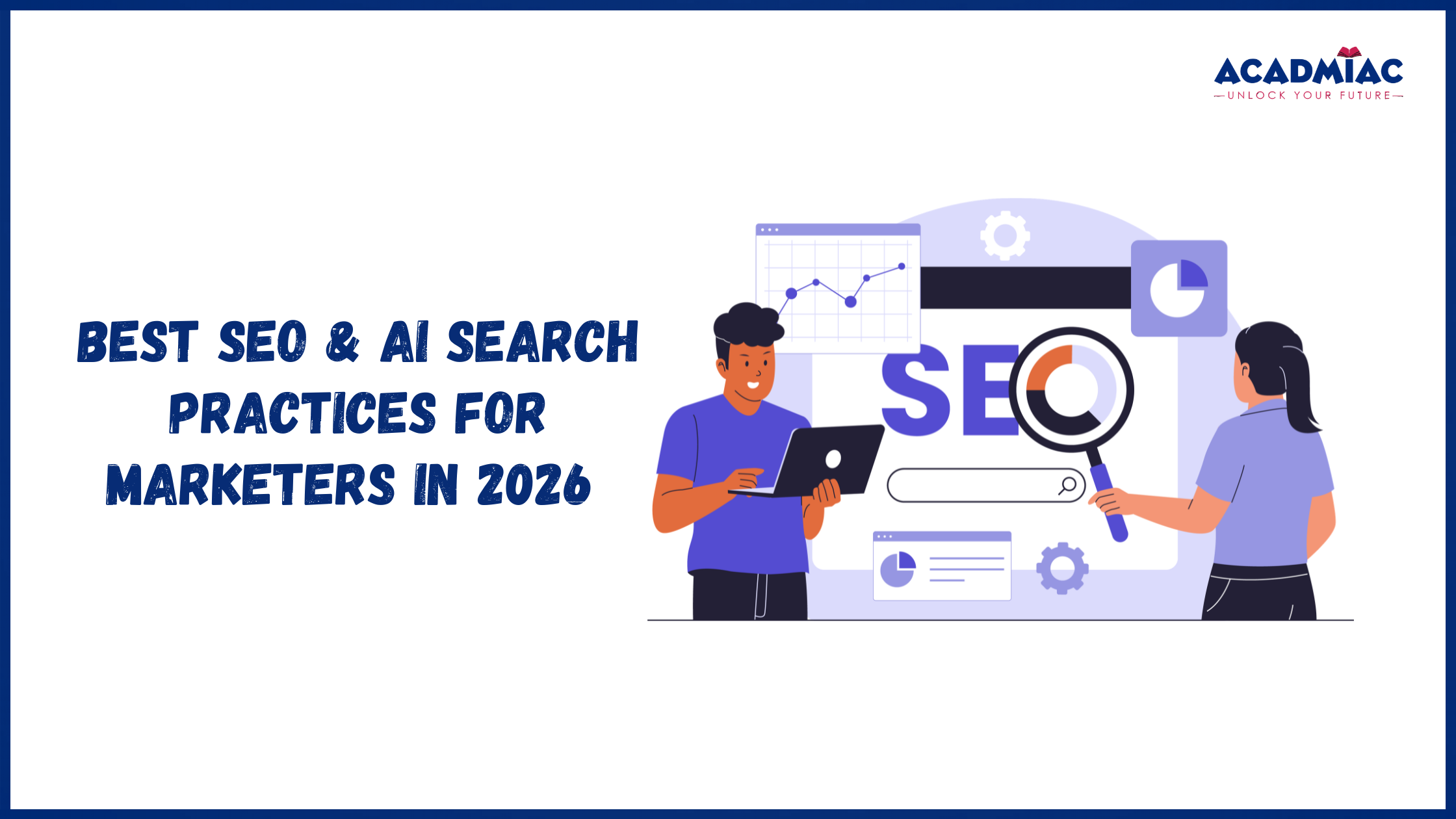
Imagine yourself in the year 2026, tasked with finding a solution to an urgent problem facing your organization. Unlike what you’ve been used to, an AI-based assistant provides a customized response to your query, using the most relevant and helpful information from across the internet.
That is how the future of search engines looks: a process that involves more than indexing pages and retrieving information in response to a query; rather, it involves algorithms that comprehend intent, synthesize knowledge, and serve as intelligent guides for users.
In 2026, SEO techniques such as keyword stuffing in your website’s content or creating shallow content appear outdated. In fact, the winners will be those who can deliver facts, solve problems, and build authority. Here is a guide to SEO techniques that will ensure visibility and credibility for your brand.
The Changing AI-Driven Search Ecosystem
By 2026, AI SEO will revolutionize the internet ecosystem. The content should not only be searchable but also citable, meaning that it must be organized in a manner that makes sense to an AI. This means that there will be greater reliance on semantics, experience, expertise, authority, and trust in search engines. This means that a brand’s survival will depend on its ability to adapt to the new ecosystem.
Reddit threads, forums, and other types of discussions will continue to rank well since they have a truly human voice. It is important to note that brands that rely on outdated strategies risk disappearing entirely, whereas AI-symbiotic brands will flourish.
The main mindset change is to shift focus from search engine optimization (SEO) to retrievability and extractability. AI likes clear answers, logic, entities, and verified facts. Think about your website as a library that AI librarians love to visit and cite.
Let us discuss in detail how to apply these techniques.
Mastering Audience & Keyword Research in the AI Era
Keyword research has remained the cornerstone, but it is an advanced field now focused on intent first. Ahrefs, Semrush, and AI-powered tools identify not only search volumes but also patterns of conversations, pain points, and emerging trends.
- Choose seed keywords — Start from broad keywords such as “SEO strategy 2026.”
- Group according to intent — Queries can be informational (“how AI impacts SEO”), navigational, transactional, or commercial investigation type. Hybrids are common, and you need to cover several aspects in your content.
- Opt for long-tail and keyword questions — Less competitive and more promising conversions-wise queries like “the best AI search optimization techniques for small businesses in 2026.” They work great in response to AI.
- Apply LSI and semantic clustering — Build topical authority by covering entities and concepts around the topic. Make pillar pages supported by cluster content.
- Go for comparison and modifier keywords — Words like “vs”, “best,” “alternatives,” or those with specific years are high-intent users.
Key takeaways for AI Search 2026:
Look to Reddit and niche forums for keywords that face little competition. Google’s increased presence on Reddit ensures that real language will make sense to both humans and AI.
Identify featured snippets, People Also Ask questions, and video content through search results analysis. Design your content to capitalize on these features.
Prioritize business benefit over vanity metrics. A low-traffic but highly targeted keyword will always trump a more popular keyword.
Through keyword clustering, you create an ecosystem for your website content in which AI can thrive.
Technical SEO: Building a Robust Foundation
No matter how good the content is, a lack of solid technical foundations will cause it to fail. Technical SEO in 2026 ensures that the site can be effectively accessed, interpreted, and trusted by crawlers and AI agents.
Areas to focus on:
- Core Web Vitals – optimize the loading speed (Largest Contentful Paint), interaction (Interaction to Next Paint), and visual stability (Cumulative Layout Shift). Use CDNs, next-generation image formats (WebP, AVIF), lazy-loading, and efficient code.
- Mobile-first indexing – responsive design is crucial; Google prioritizes mobile experience.
- Site architecture and crawlability – proper URL structure, breadcrumbs, XML sitemaps, and internal links strategically placed. Fix robots.txt and address specific bots for LLMs.
- Schema markup – use rich schema types (Article, FAQPage, HowTo, Organization, Product).
Conduct regular (once-a-month) technical audits to address broken links and orphan pages. As for optimizing for AI, the content needs to be machine-readable: short paragraphs, proper headings (H2, H3 should be formulated as questions), bullet points, and tables.
A fast and accessible website not only ranks better but also has better user engagement metrics that serve as input signals for AI.
Content Creation: Crafting AI-Friendly, Human-Centric Masterpieces
Content is still king, and the crown gets new gems in the form of depth, originality, and usefulness. In 2026, focus on creating value rather than producing content in huge amounts. AI systems love deep knowledge and fully satisfied intents.
Best practices for outstanding content:
- Intent matching — Provide direct and atomic responses (40-60 words) and further explanation of the topic in an authentic conversational manner.
- E-E-A-T magnification — Include a detailed author biography with qualifications, original research, data visualization, cases, and clear sources. Update old content to add more insights.
- AI-friendly structuring — The content must include question-based subheadings, lists, tables, definitions, and tutorials to enable easy summarization and citation.
- Multimedia optimization — Include videos, infographics, interactivity, and custom images to increase dwell time and sharing.
- Topic clustering and pillar strategy — Create comprehensive pillar pages with links to other articles.
Use the power of AI for brainstorming, structuring, and proofreading, but do not forget to involve human creativity, anecdotes, and experiments. Fully AI-generated content is usually not trustworthy enough to receive citations.
If you’re a professional looking to learn the nuances of these strategies in depth, there is always the option of signing up for the best digital marketing course.
Authority Building & Link Building Strategies
Backlinks and mentions are indicators of trustworthiness; however, quality and relevancy are essential factors. AI algorithms give preference to entities with a consistent digital footprint.
Successful strategies include:
- Digital PR and expert outreach through the HARO platform.
- Guest blogging on authoritative websites that offer real value.
- Co-creation and partnership activities.
- User-generated content and social proof via reviews and testimonials.
Entity building requires consistently optimizing NAP data, securing branded mentions, and leveraging knowledge graph signals. The main idea here is to earn links organically by creating valuable resources.
Local SEO and Optimization Across Multiple Platforms
For location-specific or regional companies, Local SEO is an absolute necessity. Optimize the Google Business Profile, acquire genuine reviews, have consistent listings, and use local schema. AI makes localization highly personalized; hence, hyper-local relevance can make a huge difference.
Extend reach beyond Google by optimizing YouTube, voice search, social media, and new-age AI assistants. Consistency in your branding and structured data helps ensure your content appears everywhere.
If you hail from India and need professional advice to execute the above optimization techniques in a highly localized manner, Acadmiac is the best coaching institute in Dehradun for you.
Measuring Success: Metrics That Matter in 2026
Classic metrics such as rankings and sessions fall short. Measure AI-specific metrics:
- Number of impressions and citations in AI overviews.
- Brand search volume and share of voice.
- Engagement metrics (scrolls, time on page, interaction).
- Conversion path from organic and AI-driven traffic.
- Core Web Vitals and user experience metrics.
Employ Google Search Console, GA4, and dedicated AI visibility tools for comprehensive data. Implement reporting for faster iterations.
Final Thoughts!
The world of SEO in 2026 is ever-changing, where adaptability, authenticity, and putting the user first are rewarded. Using cutting-edge keyword techniques, solid technical fundamentals, AI-driven content creation, establishing authority, and thinking outside of conventional platforms allows you to position your brand as a source of information both traditionally and through generative searches.
Your success depends on seeing AI as a great partner rather than a disruptive force. Be inquisitive, experiment freely, measure carefully, and focus on value creation. The brands that will thrive are those that will earn the trust of their audience through evolving technology. Start using these methods now to thrive in 2026 and beyond.
Frequently Asked Questions
It includes producing well-structured content with headings, short responses, strong E-E-A-T signals, schema, and topic clusters. All this should be accompanied by excellent technical SEO and a focus on user intent.
Now, the key elements are semantic search intent, conversational long-tail keywords, and topic clusters rather than high volume and exact match. Think about your users’ pain points and create comprehensive pages that address a range of queries.
Yes, probably even more. Technical SEO is what makes your website accessible for crawling and indexing, provides good speed, mobile responsiveness, and structured data. Without it, you won’t rank anywhere.
Highlight authorship through bios and credentials, write original articles, link to trustworthy sources, collect testimonials, and keep updating content. Engage in genuine communication and branding efforts as well to reinforce trust signals.
Watch AI citations, brand mentions, engagement, conversions, and Core Web Vitals, along with conventional rankings. Search Console and GA4 can help measure the overall performance of both conventional and generative search.






Leave a Reply