


Blending Minds and Modes: The Rise of Hybrid Education
- 2026-01-26
- 1 Com
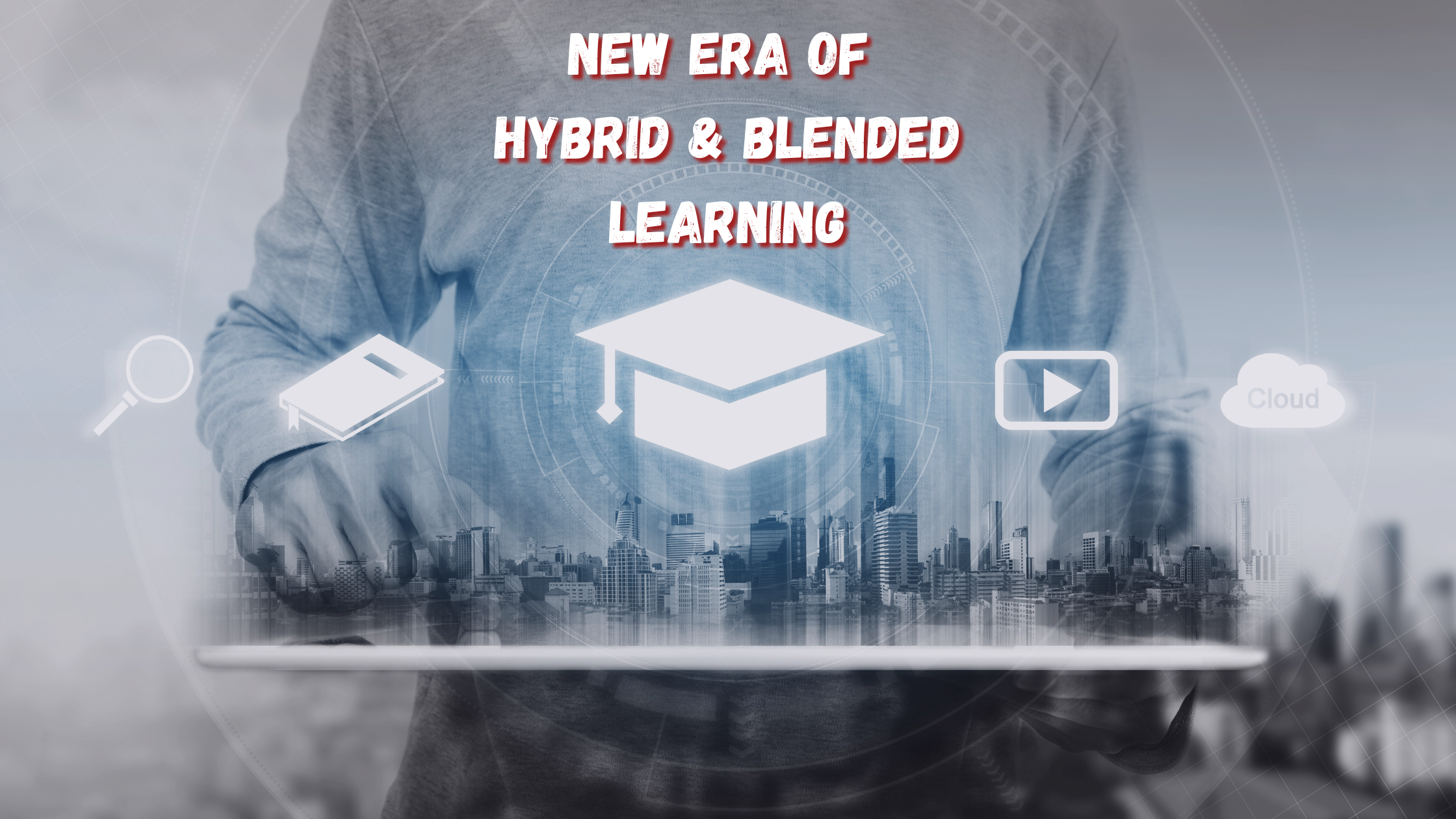
Education is no longer confined to the four walls of a classroom; we are now experiencing different means of knowledge transmission driven by evolving technology, learner demands, and industry needs. Hence, we are now in an era of revolutionary change in the field of education. This is the age of hybrid learning and blended learning, where flexibility and structure are equally important; innovation and human interaction are complementary.
It is believed that these institutions see this shift not as another passing trend but as a deeply rooted belief. The concept of hybrid and blended learning is considered the vehicle through which students can both learn and prepare for practical application.
What are Hybrid and Blended Learning?
Hybrid and blended learning are similar concepts and are therefore used interchangeably. However, they differ in meaning.
Blended learning is a mixture of the traditional classroom method of teaching and the online use of learning tools. Students may be physically present in classes while also having access to digital resources, recorded lectures, assessments, and assignments through the internet.
Hybrid learning, in contrast, gives the learners the freedom to pick between online and offline modes or to use both modes. Two students may, therefore, be one person in the physical class while the other attends the class virtually, thus making the environment more flexible and inclusive.
These models together give rise to a learning environment that adjusts itself to the learner instead of making the learner adjust to the unyielding systems.
What Are the Benefits of Hybrid and Blended Learning?
Both hybrid and blended learning have their own benefits, which should be emphasized and understood to inform how you design your learning schedule.
Benefits of Hybrid Learning
Ease of Accessibility: Because hybrid learning provides equal access to the class, whether in person or remotely, many more people have the opportunity to engage with the curriculum. If a person can physically attend, great. But if location, illness, or personal circumstances make it impossible for a learner to attend in-person, they can still get the full experience by attending online.
Lower Cost: Each time you attempt to logistically bring all of your customers, employees, or partners together in one location at one time, it can be quite costly. Hybrid learning enables you to save on costs while still receiving the best learning opportunities at an affordable price.
Health & Wellness Safety: If a child were sick or felt they might catch a virus, the hybrid model also provides the opportunity for them to be in class with their peers, so their health and safety are not endangered.
Benefits of Blended Learning
Ability to Effortlessly Integrate Different Types of Learning: Not everyone has to learn in the same way. While some people thrive on what they can see, others thrive on what they hear. Some people even thrive on reading and using what’s called “writing to learn.” Other individuals thrive on being provided a “hands-on” type of environment in which to learn. Indeed, a blended course offers a teacher every tool in the kit to “provide everything to everyone,” so to speak!
Personalization: All students in the blended course receive the same kind of instruction during their face-to-face meetings with the instructor, but the types of online practice the instructor can offer can be tailored to each student’s learning needs.
Improved Engagement: In the technological age, technology has proven that providing a means of information exchange through various outlets can spark engagement.
Why Traditional Learning Alone Is Not Sufficient Anymore
Education has long been a journey of “One size fits all.” Education has traditionally been structured around a rigid format, where a schedule of classes and a set of approved instructional methods are ‘givens.’ But today’s student is far different from any
Students now:
- Learn at different paces
- Prefer to read interactive and visually presented content
- Balancing education with other responsibilities
- There are different ways of balancing responsibilities
- Expect technology to be an integral part of their learning journey
Traditional learning approaches, though significant, have often struggled to cater to these diverse needs. Meanwhile, new learning approaches such as hybrid and blended learning offer personalization, accessibility, and flexibility without compromising the quality of education.
The Rise of Learner-Centric Education
The new age of learning puts the student at the center. There is no passive listening; rather, active participation by the student in his/her own learning journey.
Hybrid or blended learning promotes the following:
- Self-Paced Learning with Recorded Sessions
- Interactive discussions during live classes
- Exams instead of Continuous Assessment
- Skill-Based Learning Matches Industry Demands
For the learner, this approach ensures that he/she does not simply learn information, but learns, applies, analyzes, and grows.
Technology as an Enabler, Not a Replacement
One of the major fallacies about blended learning is the idea that it eliminates the need for teachers. The exact opposite is the case.
Digital tools improve the teaching experience through:
- Offering Data-Driven Student Progress Indicators
- Enabling instant feedback and assessments
- Including multimedia content for better understanding
- Facilitating personalized mentoring
Faculty members act as facilitators and guides rather than as teachers who simply provide information. This partnership between human resources and technology encourages students to become interested in the subject matter they are learning.
Flexibility That Fits Modern Lifestyles
Today’s learners vary and include students, working professionals, switchers, and other lifelong learners.
Hybrid/blended learning models can provide:
- Freedom to learn anytime, anywhere
- Access to recorded sessions for revision
- The ability to balance education with work or internships
- Reduced dependency on location
Such adaptability makes quality education more inclusive and accessible, particularly to individuals who may not perform well under a purely traditional education system.
Practical Learning and Skill Development
Education today is not defined solely by an educational certificate, but by skills and employability. The use of hybrid and blended learning helps the best coaching institutes in Dehradun to integrate:
- Hands-on projects
- Case studies and practical scenarios
- Industry-aligned curriculum
- Continuous skill assessments
Students are given the opportunity to apply their knowledge in real-world settings, whether in person or virtually. This enables the student to face the professional challenge with confidence.
Stronger Engagement Through Multiple Learning Formats
Every individual learns differently, while some may lean towards images compared to discussion and practical application as modes of knowledge absorption.
The blended model of learning can:
- Live classroom sessions
- Online Videos and Tutorials
- Quizzes e aprendizados interativos
- Group Discussions and Peer Learning Practices
This kind of variation helps keep learners “engaged, motivated, and involved”—and reduces the risk of burnout, as well.
The Future of Education is Adaptive
Education is always evolving, and one thing is sure: flexibility, exposure, and personalization are and always have been a given. Finally, hybrid and blended education is not passé, and I truly believe that’s the future.
Each institution that adapts to this evolution grants its students some level of power to prosper in an ever-changing world.
Conclusion
The emergence of a new era based on the concepts of hybrid and blended learning represents a major paradigm shift in how education will be imparted and experienced in the future.
At Acadmiac, hybrid and blended learning are not merely approaches; they are concepts that denote a commitment to innovation, success, and authentic education. As learners enter the new era of education, they don’t just receive knowledge; they also gain opportunities and the tools they need to succeed in an ever-changing world.
Frequently Asked Questions
Blended learning utilizes face-to-face and online resources; the combination of online and offline modes in learning makes up the hybrid mode.
Yes, hybrid learning is definitely very effective as the model effectively merges the practical aspects of the sessions with other aspects of technology, the real-world applications of the knowledge being imparted, and the assessments themselves.
Absolutely. Blended learning provides better personal attention through mentoring sessions, tracking, and engaging discussions in both online and offline modes.
Yes, hybrid learning provides this flexibility and recorded sessions along with a flexible class schedule, which suits working professionals.
Hybrid Flexible Learning is an instructional approach that combines face-to-face and online learning. Each classroom session and learning activity is offered in-person, synchronously online, and asynchronously online.




Leave a Reply