


New Year, New You: How Soft Skills Will Help You in 2026?
- 2025-12-31
- 3 Com
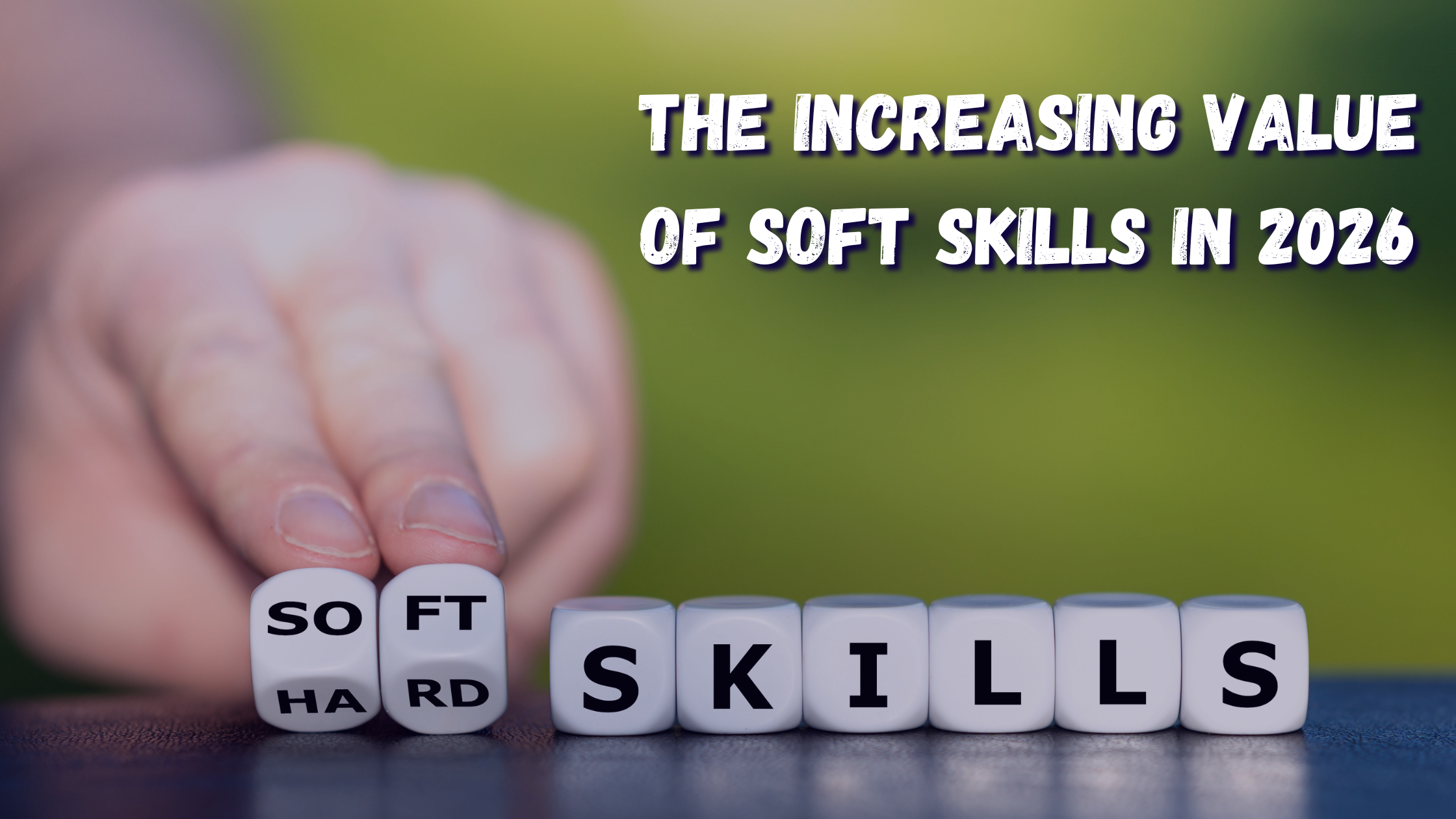
The war for talent means businesses must confront a crucial question: will they succeed in the coming years or become obsolete? As we enter 2026, the solution to this question is not just about your employees’ technical abilities but also their ability to work well in teams, be flexible, and communicate effectively. To provide this assurance, a survey found that 92% of employers consider soft skills as critical as, or more important than, hard skills.
As industries are being revolutionized by AI and automation, soft skills such as leadership and problem-solving are increasingly recognized as essential in organizations. Organizations that focus on soft skills are gaining an edge over others.
This blog outlines the reasons for the center stage role of soft skills in 2026, the in-demand soft skills, and ways to bridge the growing gap to prepare for the future of work.
What are Soft Skills?
“Soft skills” are a set of competencies that help a person build relationships, interact effectively in the workplace, and communicate efficiently. These skills include emotional intelligence, teamwork, adaptability, problem-solving, and leadership.
As the professional landscape has changed dramatically over the past few years, soft skills are even more essential. Employers are keenly seeking candidates with the technical skills required for their roles, as well as soft skills.
How are Soft Skills Useful?
Beyond technical knowledge, soft skills help people work effectively with others and navigate real-world challenges. Below are the key ways they are helpful.
Collaboration in Remote Work: As remote work becomes the norm, effective communication and teamwork skills are essential to maintaining productivity.
Leadership in a Diverse Workforce: Organizations seek leaders with the skills to manage and motivate culturally and geographically diverse teams.
Problem Solving in Dynamic Environments: Thinking critically and adapting to challenges are essential in rapidly changing industries.
The Evolved Meaning of “skills” in the Workplace
In the past, hiring managers prioritized hard skills, technical proficiencies quantifiable through certifications or qualifications. Coding, data analysis, and machinery operation are examples of skills that characterize a person’s capacity and employability.
However, as more routine and technical activities are automated and augmented by artificial intelligence (AI), the value of the workforce increasingly rests on abilities that are uniquely human. These are skills that machines cannot adequately replicate, including creativity, problem-solving, emotional intelligence, and communication. Hiring procedures are changing as a result of this change in the “soft skills”, and companies need to adapt to these developments.
Why Soft Skills Matter More Than Ever?
The increasing emphasis on soft skills is driven by multiple trends shaping the workplace:
The Human Edge in an AI-Driven Economy
Although AI and automation are driving major shifts across sectors, they cannot be creative thinkers, decision-makers with emotional intelligence, or trusted individuals.
It is the soft skills of empathy, critical thinking, and leadership that differentiate humans from machines. A McKinsey study estimated that by 2030, as many as 375 million people may require reskilling due to automation. Emotional intelligence and creative thinking skills will help people adapt to their roles.
Improving Teamwork in Hybrid and Remote Working Schemes

The trend towards hybrid or work-from-home arrangements presents novel challenges. Without face-to-face communication, teamwork, and emotional intelligence, it is essential to ensure workers remain productive. According to a Deloitte study, organizations that prioritize effective communication and teamwork achieve 20-25% gains in team productivity.
Navigating Rapid Organizational Changes:
There are always changes occurring in an organization, ranging from technological changes to market shifts. A professional with the capacity to adapt will easily navigate through such uncertainties.
Meeting Evolving Customer Expectations
For customer-facing businesses, active listening and conflict resolution are now necessary. Today, it is not enough for businesses to resolve issues; they must deliver extraordinary, people-centric experiences for their clients. Harvard Business Review found that companies focusing on empathy and customer experience outperform their peers by up to 85% in revenue.
Rather than being merely “nice to have” skills, soft skills must become the building blocks of success within organizations and for employees in 2026.
Top Soft Skills of 2026
Soft skills on a resume are in high demand in the workplace. Top Soft Skills that will help you get hired in 2026 are:
Critical Thinking and Problem-Solving
Employers want people who can break down challenging problems, assess potential answers, and make informed, data-driven decisions.
For instance, during the COVID-19 outbreak, companies found that employees who could rapidly shift priorities and strategies to meet unexpected obstacles were especially valuable.
Emotional Intelligence (EQ)
With EQ, people can interpret and regulate their emotions, connect with others, and motivate a team. Workers with a high EQ improve organizational performance by 70%, according to Daniel Goleman.
Adaptability and Resilience
Prospering in a changing world is increasingly vital as industries evolve. Resilient individuals recover from adversity and lead change effectively.
Collaboration and Teamwork
In hybrid and cross-functional teams, building trust, appreciating diverse viewpoints, and achieving a shared purpose are essential to success.
Communication Skills
Effective written , verbal, and virtual communication facilitates clear expression of ideas, reducing miscommunication and boosting productivity.
Leaders and Decision-Making
The organizations are looking for professionals who can inspire their teams, make strong decisions, and lead the way to success.
Creativity and innovation
Innovation means creating new and better things. This is a sought-after skill in industry, especially in technology, marketing, and design.
Although these soft skills are in demand, companies often struggle to identify candidates with sufficient levels of these skills.
How to Develop Soft Skills in 2026?
Soft skills show how you use your knowledge in practical settings, whereas hard skills show what you know. Here are some ideas for cultivating soft skills:
1. Practice Active Listening
Listening is the first step in effective communication. Be Known for What You Decide by Understanding Others, Asking Questions, and Providing Smart Answers in Discussions.
2. Engage in Public Speaking & Writing

Enhance your communication skills by blogging, creating videos, or joining public speaking clubs. As you gain more practice, you will build confidence.
3. Take Online Courses & Workshops
Focused training in communication, leadership, and emotional intelligence is available on online learning platforms.
4. Seek Feedback & Self-Reflect
Obtain feedback from mentors, peers, and superiors to identify areas for improvement. It is easier to identify one’s strengths and weaknesses through regular self-reflection.
5. Join Networking Events & Professional Groups
Interacting with diverse professionals enhances one’s skills in teamwork, negotiation, and flexibility.
6. Participate in Team Projects & Leadership Roles
Volunteer for leadership roles in your community, workplace, or college to strengthen your groups and decision-making skills.
Final Thoughts!
As you plan for 2026, keep in mind that soft skills will be crucial to helping you shine through in a competitive job market. Coding may get your foot in the door, but it is soft skills that determine how well you work with others, how effectively you communicate, and how well you thrive in a professional setting.
In 2026, your true competitive advantage is soft skills in communication, and they could help turn that “maybe” into a resounding “yes” at the hiring desk. When you combine solid technical knowledge with guidance from the best coaching institute in Dehradun, you are setting yourself up for success for years to come.
Update your résumé, practice your spiel, and go forth prepared to demonstrate who you are and not just what you do. With a happy new year 2026, join hands with Acadmiac and meet a brand-new version of yourself.
People Also Ask!
They are communication, adaptability, problem-solving, and teamwork skills. Hard skills show employers what you can do, while soft skills show them how you do it and how you work with people.
Soft skills are the personality traits and the little actions that make people’s lives easier. These enable individuals to communicate with others productively and peacefully. The 5 Cs of soft skills for students are Communication, Creativity, Collaboration, Citizenship, and Critical Thinking.
Soft skills, including communication, adaptability, and emotional intelligence, are critical for collaboration and innovation in an increasingly virtual and global workforce. They assist employees in addressing complex issues and cultivating a positive workplace culture.
Soft skills, including emotional intelligence, problem-solving, critical thinking, collaboration, and flexibility, will be in high demand because they help employees thrive in fast-paced, ever-changing environments.
Technical expertise is just half of the story when it comes to how technology is changing work. Today, soft skills such as empathy, flexibility, and communication are essential for navigating complexity, building trust, and maintaining influence.




Leave a Reply