


Scope of Social Media Marketing in 2026 & Beyond
- 2026-06-15
- 1 Com
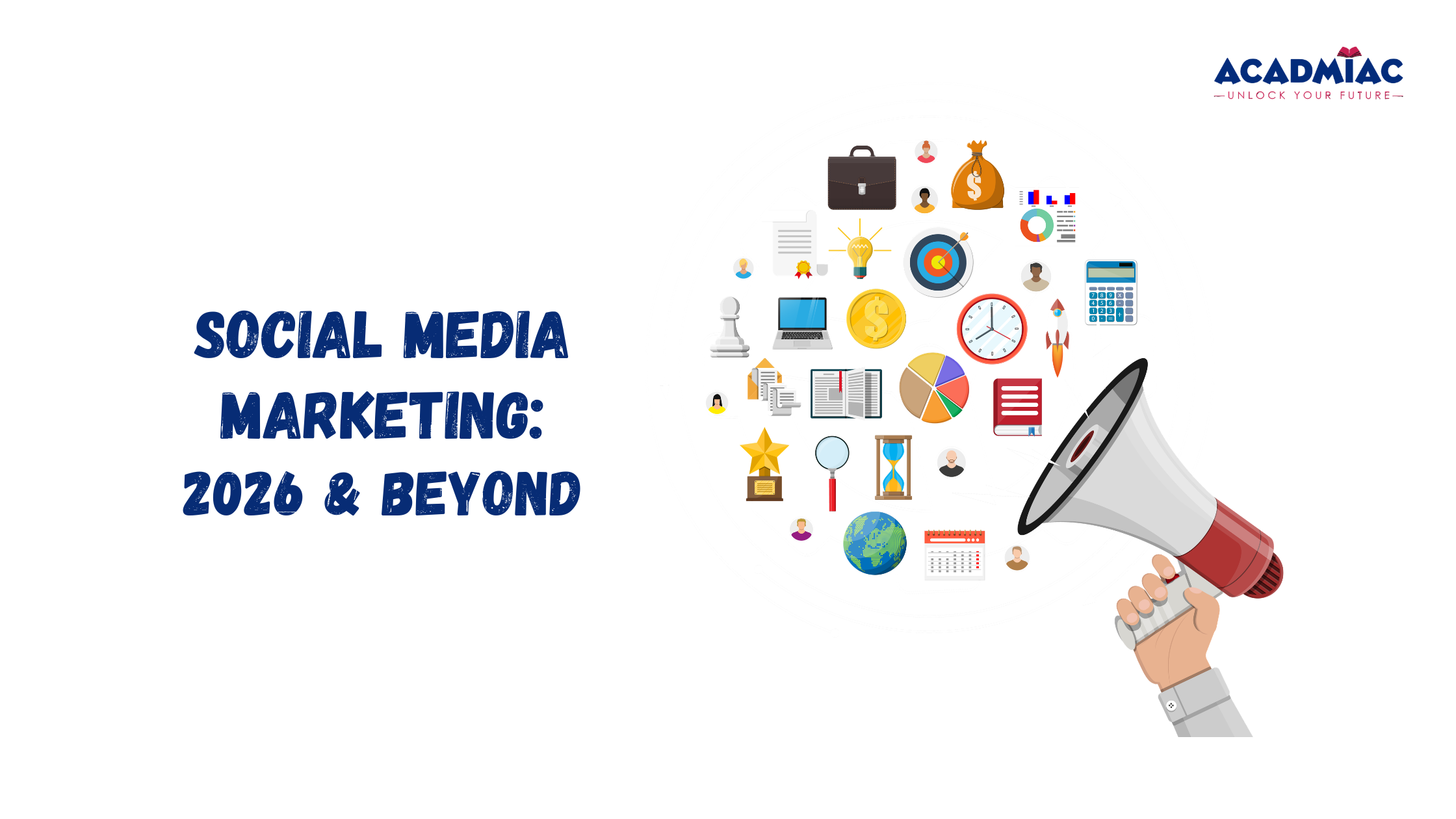
Let’s say you are at Jolly Grant Airport and notice people waiting for their flights while browsing their Instagram feeds. One of them spots an amazing picture of a Himalayan trek, and after a minute, they click the link and book through the website. It is not magic, but rather the effectiveness of Social Media Marketing (SMM).
In the year 2026, the number of social media users worldwide is 5.66 billion, and the average time spent by users on social media is almost 2 hours and 40 minutes. So, SMM is the most powerful weapon of brands that want not only to stay in touch, but also to convert and even grow, raised to the highest level. But what is it exactly? How does it function? And is it of any use to you?
Let’s jump into the topic!
What does Social Media Marketing mean?
Social Media Marketing (SMM) is about using social media platforms to engage with customers, promote products, enhance brand image, and drive website traffic. It is a blend of marketing basics and the engaging, persuasive capabilities of social media networks such as Instagram, Facebook, TikTok, LinkedIn, YouTube, X (Twitter), and newly launched platforms like Threads and Bluesky.
One big difference between SMM and ordinary advertising is that the former is not only about sending out messages; it is about making people talk. You produce content, answer people’s comments, conduct surveys, partner with leading influencers, and use highly targeted ads to reach the right people. The main motive? Getting people’s confidence, encouraging interaction, and in the end, stimulating the desire to take action.
In 2026, product discovery via social platforms like TikTok, Instagram, and YouTube will make up for over 60%, leaving Google behind. This major change means that SMM is no longer an option; it is a necessity.
How Does Social Media Marketing Work?
SMM isn’t simply about posting randomly. It is a well-organized procedure that progresses from strategy to implementation to evaluation. The steps are like this:
1. Define Your Goals
What do you want? Brand awareness? Sales? Customer support? Website traffic? Your single objective fashion everything – from the kind of content to the choice of platform. For instance, a travel brand might aim to “get bookings,” whereas an airline might consider “delighting customers” its primary objective.
2. Choose the Right Platforms
Each platform is not capable of catering to all the different objectives. Here’s a quick breakdown:
| Platform | Best For | Key Stat (2026) |
| Product discovery, customer service | 3.07B monthly users; 40% use it for reviews | |
| Visual content, Reels, shopping | 3B users; 72% of Gen Z prefer it for customer care | |
| TikTok | Viral content, Gen Z discovery | 49% of Gen Z use it for product discovery |
| B2B marketing, professional content | 1.3B members; top channel for B2B marketers | |
| YouTube | Tutorials, reviews, long-form video | 2.6B users; 1.6x more likely to influence purchases |
| X (Twitter) | Real-time news, brand conversations | 450M users; 58% engage with brands weekly |
3. Make Content That Clicks
According to a 2026 forecast, content created by humans will be the primary focus for users. People will simply ignore fake or overly branded, excessively polished content. Consumers are after authentic voices, handy tips, and genuine experiences.
Here are some of the best content formats:
- Short-form video (Reels, TikTok): Highest ROI among video formats by 41%
- User-generated content (UGC): 94% believe that influencer marketing is more effective than traditional advertising
- Educational posts: Mainly on LinkedIn (text posts generate the highest level of engagement)
- Live video: Creates trust through real-time interaction
4. Get Conversing With Your Audience
SMM is not just talking but also listening. Answer comments within a few hours (73% of consumers will abandon a brand to its competitors if it fails to respond). Conduct polls, Q&As, and utilize direct messages to create bonds.
5. Run Targeted Ads
Paid social skills are a part of everyday life. By 2026, $317.33 billion will be spent on social media ads, with mobile devices accounting for 82.9% of these expenditures by 2030. Through ads, you can target specific demographics, interests, and behavior,s great for selling travel packages, enticing with flight deals, or promoting airport services.
6. Measure and Optimize
Track engagement (68%), conversions (65%), and revenue impact (57%). Use platform analytics to see what works, then adjust. SMM’s long-term results aren’t immediate, but persistence pays off.
Where can you learn Social Media Marketing?
Becoming a Social Media Marketing pro needs top-notch training from industry experts. Acadmiac is one of the best coaching centers in Dehradun for Social Media Marketing, digital marketing, SEO, and content strategy courses.
Why Acadmiac stands out:
- Industry Experts: Gain exposure to professionals whose clients include top brands, collabs, and companies.
- Practical Training: Not just theory but also live campaigns, hands-on assignments, and portfolio projects
- SEO-Centric Curriculum: Perfect for content creators who want Google ranking for their blogs, meta descriptions, and FAQs
- Small Class Size: Personal attention helps you to understand the topics thoroughly
- Job Support: Placement support is offered to students by connecting them to digital marketing companies
- Flexible Timings: Working professionals can avail weekend and evening classes
- Course Highlights: The SMM curriculum includes platform strategy, influencer partnerships, ad budgeting, analytics, and ROI measurement, equipping you with the most essential practical skills to succeed.
Benefits of Social Media Marketing
There are many benefits when it comes to SMM, especially for content makers, travel companies, and small businesses:
1. Huge Reach and Brand Recognition
With millions of users on social networks, SMM helps reach a worldwide audience immediately. There are 3.07 billion active users on Facebook alone—that is more than a third of the entire population of the world.
2. Affordable Marketing Strategy
The cost of SMM can be very low compared to traditional marketing. Organizations only have to pay between $500 and $5,000 per month for social media management, which is significantly lower than other forms of marketing.
3. Engage Customers
Customers can be engaged directly through comments, direct messages, and even polls.
4. Extremely Precise Advertising Campaigns
Target consumers with age-specific, location-specific, interest-based, behavior-based, and purchase-based criteria. For example, for Himalayan trekking packages, you can target adventurous tourists in India aged 25 to 40 who follow travel blogs.
5. Instant Feedback and Trend Identification
With SMM, get real-time feedback and trend identification. Find out what performs and does not work for you and what trends have emerged.
6. Improved SEO and Website Traffic
Content published on social sites improves your SEO performance and drives traffic to your website or blog posts through shared links.
7. The Strength of Influencer Marketing
According to a study by Ascend2, 94% of organizations feel that influencer marketing yields 2x to 3x the returns compared to regular digital marketing campaigns.
The Cons of Social Media Marketing
SMM doesn’t come without a few drawbacks. Here are some points to consider:
1. Time-Consuming & Regularity is a Must
SMM requires you to create new content continually. Apart from posting regularly, daily engagement and staying active are part of your lifestyle. It may take several months of organic growth before you reach a stable level.
2. Always Changing Algorithms
Social networks often update their algorithms, sometimes even secretly. Such updates may instantly reduce your visibility. Really, so making it risky to plan for the long term.
3. Negative Comments Can Go Viral
Unfavorable comments can spread just as fast as the good ones. A social media strategy that didn’t go down well or a comment from an angry customer can hurt your brand’s image within a few hours. Getting “canceled” online is a possibility.
4. Content Saturation & The Competition
There are billions of posts published every day, resulting in content saturation. You have to be creatively innovative all the time to be noticed, and that really pulls on resources, in particular for smaller companies.
5. Privacy Issues & Data Leaks
People are increasingly concerned about how their data is handled. After a leak, people are more likely to distrust social campaigns.
6. Revealing The ROI May Be Problematic
Unlike channels where selling is direct, understanding how fruitful an investment in social media marketing is can be challenging. In fact, a lot of engagement results in zero revenue.
7. Expenses May Increase Rapidly
Unmanaged paid campaigns lead to a rapid increase in advertising costs. If you target in a very vague way, much money might just dissipate without any success.
Conclusion: Is SMM Worth It?
Definitely yes! Though it has its challenges, SMM remains the most powerful method for building brand awareness, engaging audiences, and generating sales in 2026. Since 60% of product discovery occurs on social media platforms, by not employing SMM, you are essentially leaving significant opportunities untapped.
What’s the trick? Have a well-defined target first, select the suitable platforms, produce genuine content, interact regularly, and track your performance. While it takes time and effort, and the algorithms keep changing, the return on investment, if done correctly, is better than any other form of advertising.
For content creators, travel companies, and digital marketers, SMM is much more than just a tool. It is the marketing of the future.
Frequently Asked Questions
Social Media Marketing (SMM) refers to using various social media sites to market a brand, products, or services. This strategy is important because it helps companies target potential clients, build brand awareness, drive website traffic, and boost client engagement.
Choosing the best social media platform for your marketing campaign depends on your target audience and objectives. For instance, LinkedIn works perfectly for B2B marketing, while TikTok is best for targeting young people.
Marketing expenses depend on factors such as the marketing strategy used, the social media platform chosen, the budget allocated to social media advertising, and the need to create content.
The advantages of SMM include brand recognition, customer engagement, targeted advertising, increased web traffic, lead generation, and enhanced customer relations.
Acadmiac is considered one of the top coaching centers in Dehradun for SMM, digital marketing, SEO, and content strategy course training programs. Here you can learn from industry experts, gain hands-on experience through real-world projects, benefit from an SEO-based syllabus, and receive personal attention due to a small batch size.
Acadmiac offers top-notch skill courses related to digital marketing, social media, and beyond.




Leave a Reply